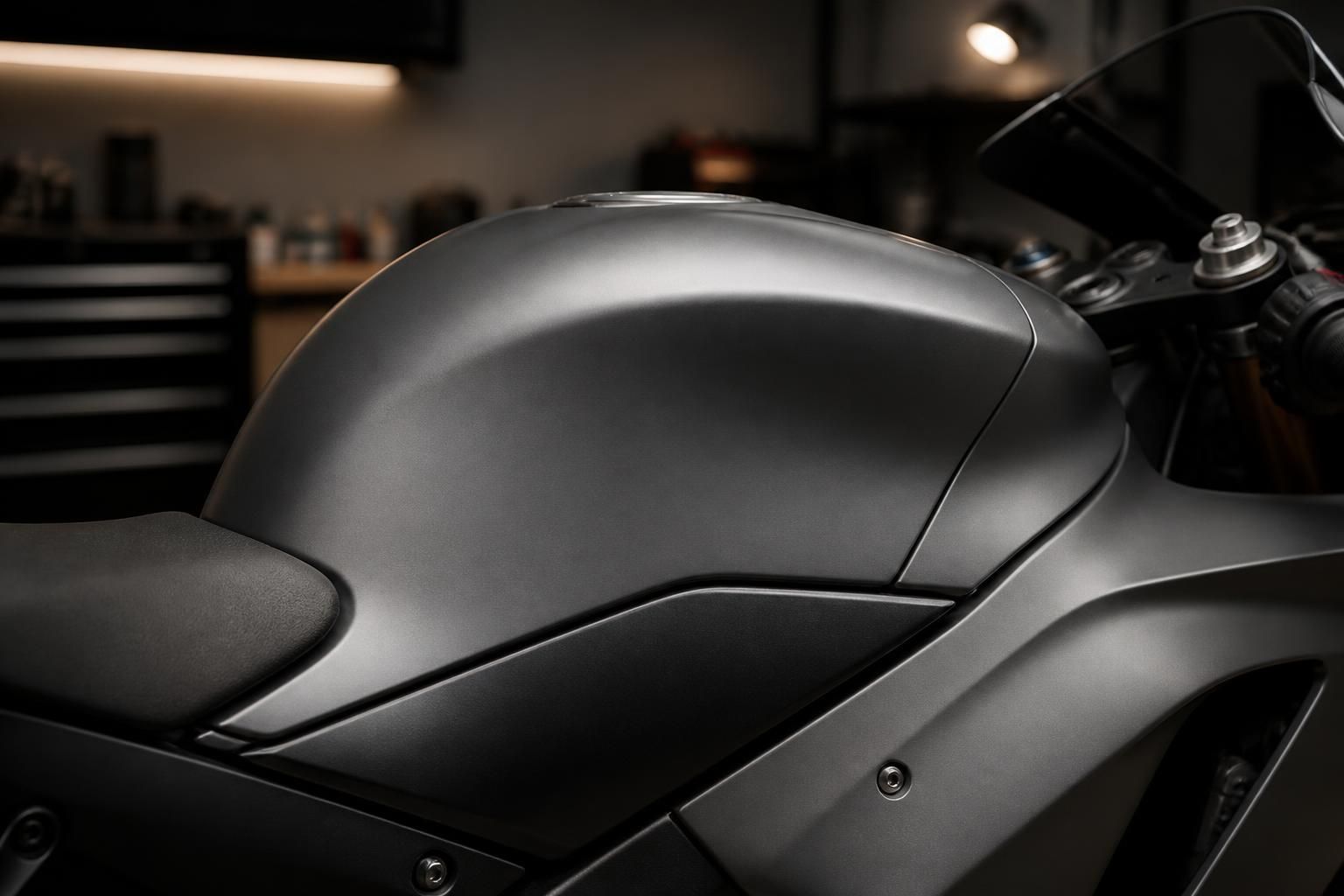
Motorcycle Wraps in White Oak
Motorcycle wraps for riders who want a new color, custom graphics, or a fresh look without repainting.
Motorcycle wraps for riders who want a new color, custom graphics, or a fresh look without repainting.
2 Lane Customs offers motorcycle wraps in White Oak, Texas for riders who want a new color, custom graphics, or a cleaner look without committing to a full repaint. That can mean a full color change, a tank and fender wrap, or accent graphics on a bike you already love. To get started, call or send a request with your bike's make, model, and the look you have in mind.
Maybe your paint is dull from years of East Texas sun, your tank has scratches and chips, or your bike looks like every other one in the parking lot. You may have a design idea but no clear way to turn it into something that fits the curves of a motorcycle. A wrap is one way to solve that, and the first step is a conversation about your bike, your budget, and how you ride.
Motorcycles are harder to wrap than most vehicles. Tanks, fenders, fairings, and side panels are full of tight curves, recesses, and edges, and those details decide whether a wrap looks like paint or looks like a sticker. This page covers wrapping the body panels and visible surfaces of your motorcycle.
Common motorcycle wrap projects include:
Some riders arrive with a finished design. Others only know they want something bold, clean, or subtle. Either way, the design should be planned around the shape of your specific motorcycle, not pulled from a flat template. Good graphics follow the lines of the tank and fenders instead of fighting them.
Bring photos, color ideas, logos, or examples of bikes you like. Tell us whether you want something that stands out from across a parking lot or something that looks like a factory option. That direction shapes everything that follows.
Riders often compare a wrap to a new paint job, and they are different services. A wrap is a film applied over the surface. Paint is a coating that changes the surface itself. This page covers wraps.
Every shop has its own routine, but a motorcycle wrap normally follows the same general path.
Whoever wraps your motorcycle, these are the standards worth holding them to:
Riding around White Oak and Longview usually means hot, humid summers, strong sun, pollen in spring, and the occasional storm. Bikes also tend to live outdoors or in open garages more often than cars do. Heat and UV can be hard on any exterior finish, so how you park, store, and wash the bike will affect how your wrap holds up over time. Ask about finishes and care routines that make sense for your riding habits.
Motorcycle wraps are priced by the work involved, not by a flat rule. The main factors are:
A clear written quote should spell out which panels are included, the film and finish, what design work is covered, what prep is expected, and how changes are handled if you add or remove something partway through.
Before hiring anyone to wrap your motorcycle in the White Oak area, ask:
It depends on the size of the project and the bike. A tank and fender wrap is usually quicker than a full color change, and bikes with many fairings or custom artwork take longer. We can talk through timing once we know your plan.
Pricing comes from coverage, the complexity of the bike, film and finish, design work, disassembly, and the condition of the surface. Send a request with photos and details so the quote reflects your actual project.
Yes. Many riders start with a tank, fenders, or accent graphics. A partial wrap is a good way to refresh the look while keeping the cost and scope smaller.
It usually works best over sound, smooth paint. Peeling clear coat, rust, or rough spots can cause problems, so the surface is checked before a wrap is planned.
Gentle washing is typically the rule, and harsh scrubbing, aggressive chemicals, and long periods in direct sun are usually best avoided. We can walk you through care details for the finish you choose.
Yes. Share your ideas, colors, logos, or inspiration photos, and we will work out a design that fits your motorcycle. Call or send a request to start the conversation.
Start Your Project
Tell us about your vehicle and what you have in mind. We will help you choose the right wrap, tint, paint restoration, or coating and plan the next step.